










Walk into almost any bedroom that feels slightly ‘off,’ and you’ll spot the problem within seconds: a completely blank wall right above the bed. Transforming that space into a stunning sage green and burnt orange bedroom is all about getting color balance and texture right.
That bare headboard wall makes ceilings feel awkwardly high and leaves the bed floating without purpose, turning what should be a cozy retreat into something closer to an unfinished guest room. Sage brings a quiet, leafy calm that makes it easy to unwind at night, while burnt orange think baked terracotta, clay, and warm spices cuts through the chill and keeps things intimate.
Here are 18 practical, designer-tested ways to style this palette in your own bedroom.
Why a Sage Green and Burnt Orange Bedroom Works So Well
On a classic color wheel, greens and red-oranges sit directly opposite each other. In their purest forms, they fight for attention. But when you pull back the saturation—leaning into dusty, grey-toned sage and warm, earthy rust—that friction turns into easy harmony. You get a room that feels lively enough to hold your attention, but calm enough to help you sleep.
18 Ideas to Style Your Space
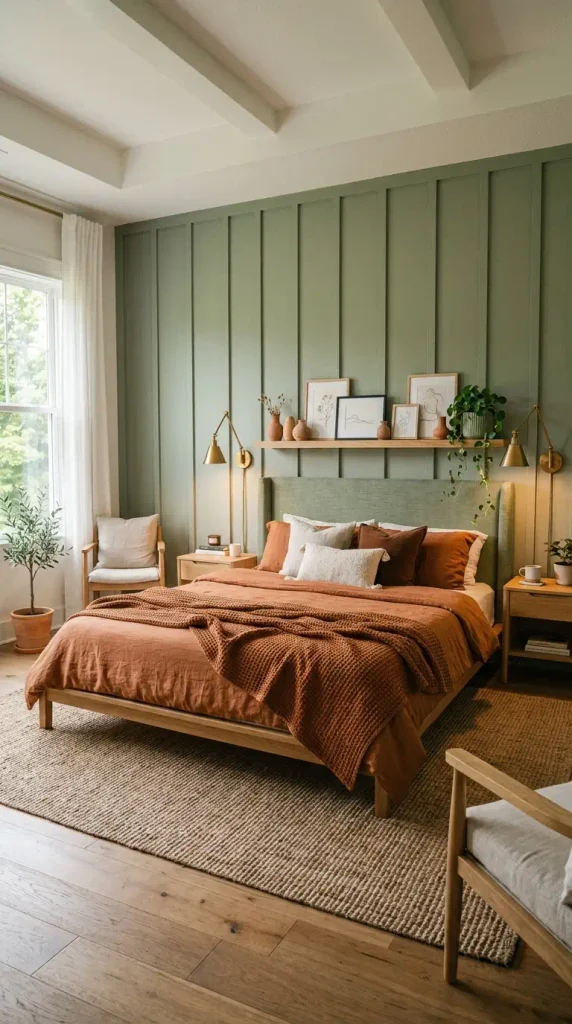
1. Board and Batten Accent Wall with Brass Sconces
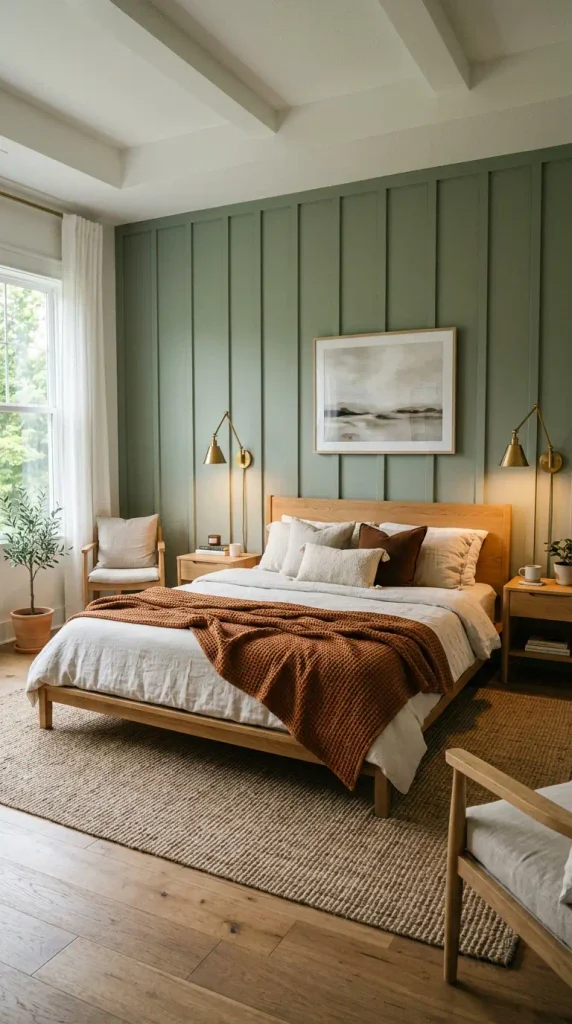
Give the wall behind your headboard architectural weight with vertical battens. Measure your wall and space narrow MDF strips roughly 12 to 16 inches apart, running to the ceiling or stopping at chair-rail height. Paint everything—boards, trim, and drywall—in ultra-flat or eggshell sage green.
Place a low-slung wooden bed in front, then drape a heavy burnt orange waffle throw across the foot of the mattress. Mount brass swing-arm reading sconces right onto the battens on either side of the bed.
The vertical lines fool the eye into seeing taller ceilings, while warm brass and rust bedding keep the structured woodwork from feeling stiff.
2. Oversized Terracotta Abstract Canvas
If you rent or don’t want to deal with carpentry, treat the space above your headboard as a gallery wall for one standout piece. Pick a large canvas with organic strokes of rust, terracotta, and soft stone. Hang it so the bottom frame sits 8 to 10 inches above your headboard. A soft sage linen headboard underneath gives the artwork a gentle place to land.
A single large frame looks deliberate and clean. Small multi-frame galleries can get chaotic quickly in a bedroom; one bold piece instantly pulls the space together.
Image Prompt: A bedroom with a large abstract canvas hanging above a sage green linen headboard. The artwork features organic brushstrokes in rust, terracotta, and soft stone tones. The canvas bottom sits about 10 inches above the headboard. Minimalist styling, soft ambient light, clean and deliberate composition, interior design photography.
3. Layered Roman Shades and Floor-Length Velvet Drapes
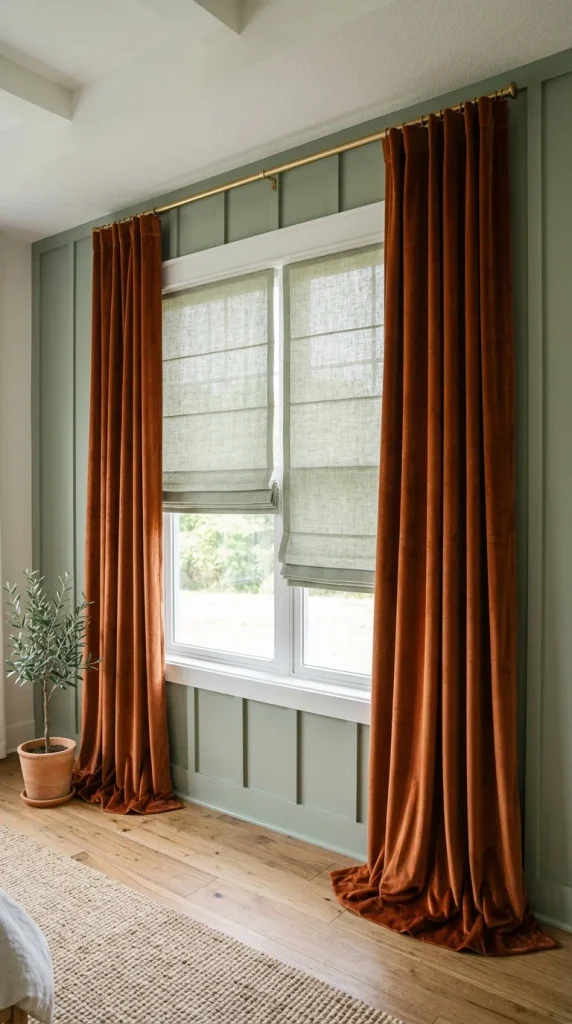
If your bed sits between or next to windows, use window treatments to carry the color scheme. Fit custom or semi-custom linen Roman shades inside the window frame in pale sage. Then mount a brass curtain rod high near the ceiling and hang floor-to-puddle velvet drapery in rich burnt orange on the outside.
This gives you total control over light and privacy, and layers two distinct textures: light, breezy linen paired with dense, light-catching velvet.
4. Two-Tone Color-Blocked Half Wall
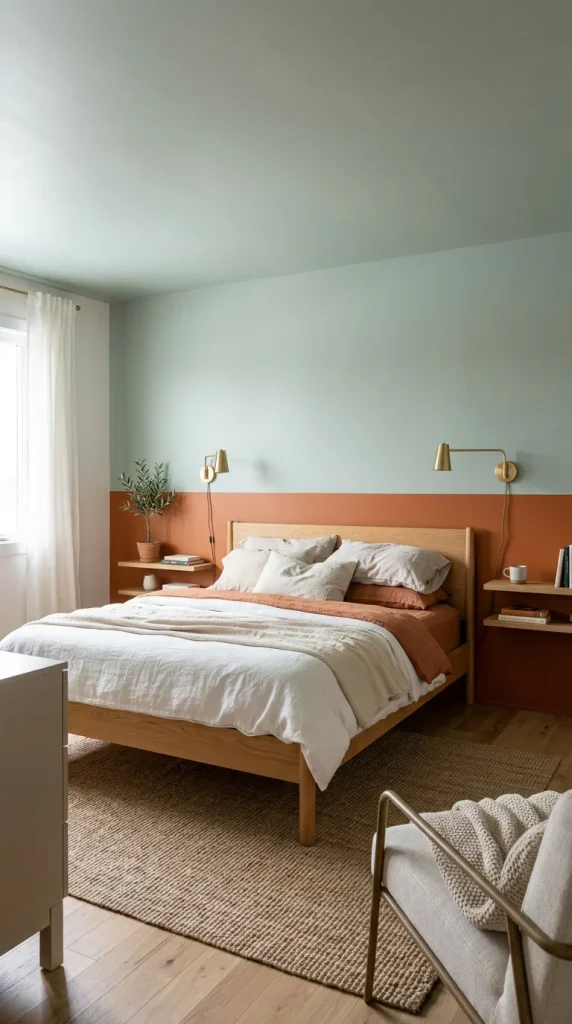
Fake the look of architectural paneling with painter’s tape and two cans of paint. Run a straight horizontal line roughly 48 inches off the floor across the headboard wall. Roll rich, earthy burnt orange along the lower portion, then coat the upper wall and ceiling in soft, misty sage.
Painting the lower half in a deeper shade grounds the bed, while letting pale sage travel up and across the ceiling blurs harsh lines, making standard eight-foot ceilings feel airier.
5. Botanical Wallpaper with Washed Rust Bedding
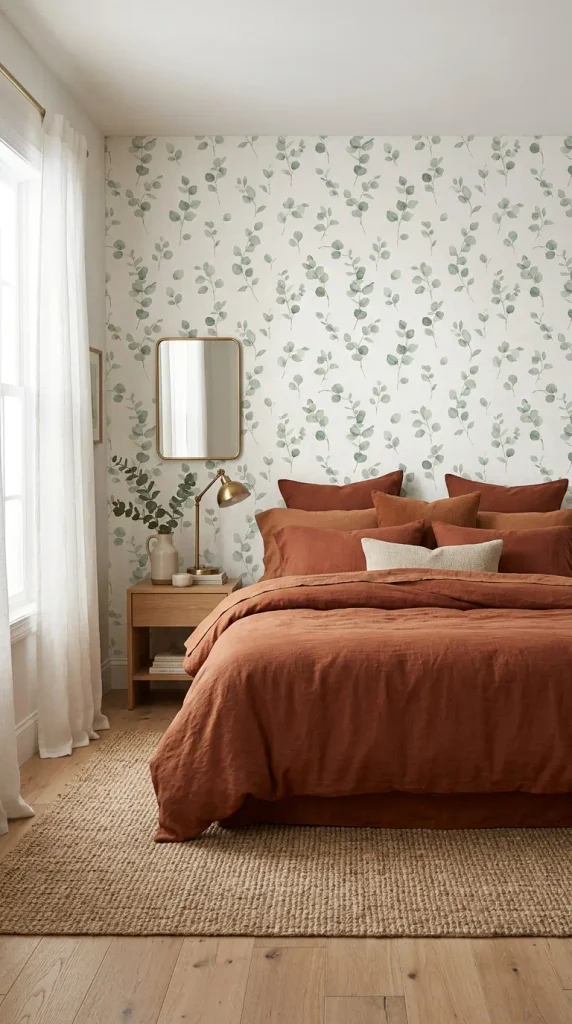
Pick an understated botanical peel-and-stick wallpaper showing soft eucalyptus leaves, ferns, or olive branches against a warm white ground. Paper only the wall behind your bed to keep the pattern from overwhelming the room. Down below, dress the mattress in washed French flax linen in a deep, spice-toned rust, topped with plump pillows.
The leafy pattern breaks up flat walls, while heavy rust linen keeps the delicate wallpaper from looking too sweet or cottagey.
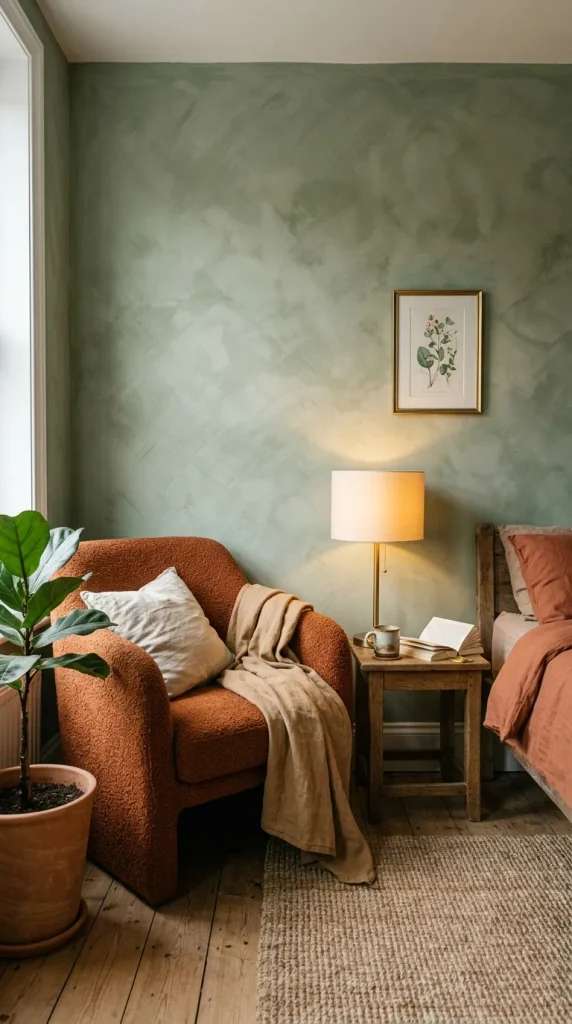
6. Limewash Feature Wall with a Cozy Reading Corner
Ditch standard latex paint for sage green limewash or mineral paint on your main wall. Brush it on using wide, cross-hatch strokes with a large block brush. As it dries, natural minerals create a cloudy, subtle plaster texture that shifts with the light throughout the day. In the corner, add an inviting burnt orange boucle armchair and a simple, warm-toned reading lamp.
Limewash gives flat drywall an organic, lived-in feel that doesn’t need much art to look complete.
7. Floating Oak Picture Ledge
Mount a 4- to 6-foot solid white oak ledge about a foot above your headboard. Instead of committing to permanent screw holes for every print, lean a curated mix of small sketches, handmade terracotta bud vases, and a small trailing plant in a sage pot directly on the shelf.
A picture ledge lets you swap out art and seasonal stems in minutes without touching a drill again.
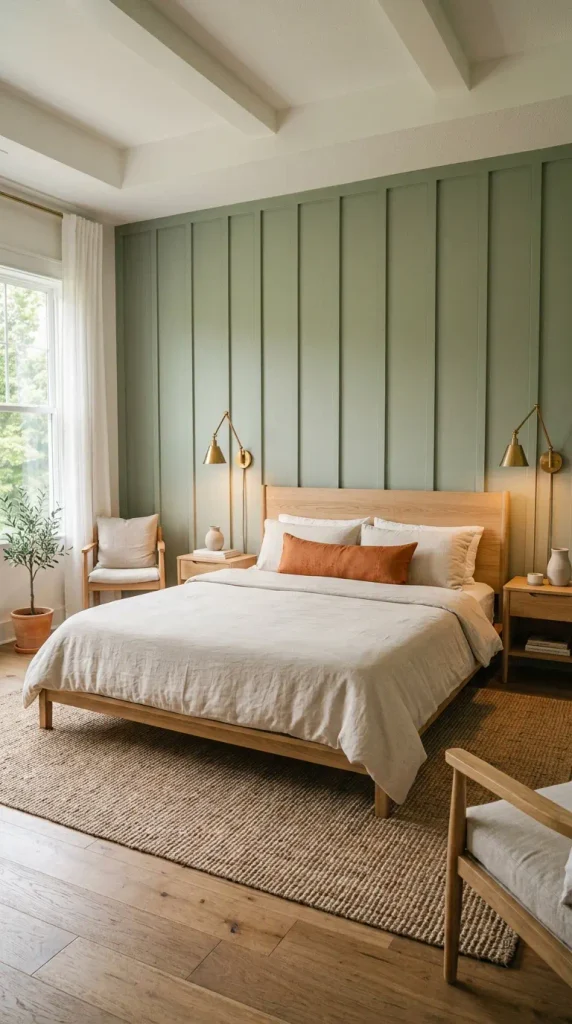
8. Japandi Low-Profile Bed with Silk Bolster
If clutter makes you restless, take a minimal Japandi approach. Use a low-slung, untreated ash or pine platform bed frame set against pale, barely-there sage walls. Keep base bedding neutral—undyed cotton or oatmeal linen—and add just one deliberate pop of color: an elongated burnt orange raw-silk lumbar pillow across the front.
It strips the room down to what matters: quiet walls to clear your mind, warm wood to ground the room, and a slice of rust for warmth.
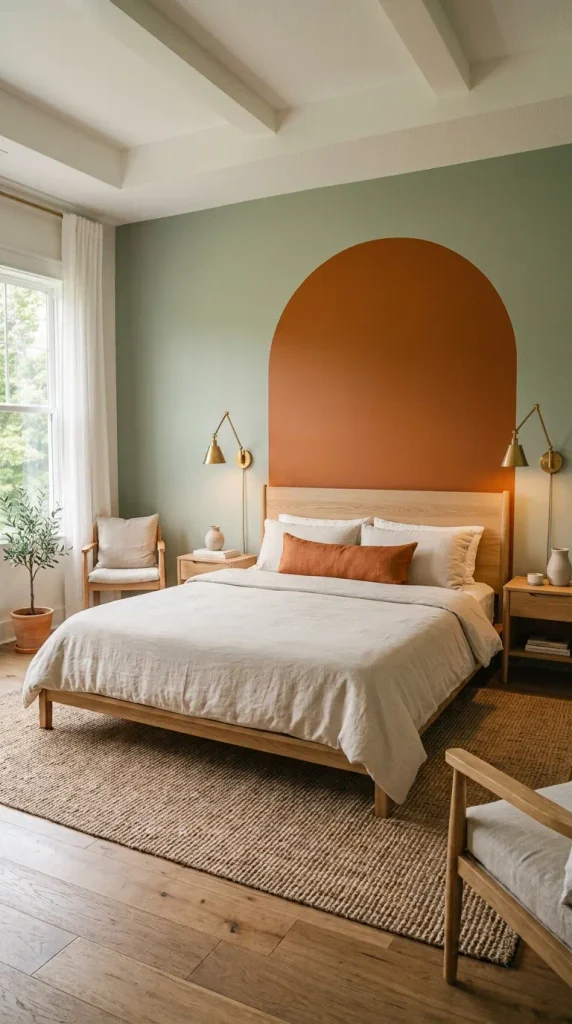
9. Painted Headboard Arch
Frame your sleeping nook without buying a new headboard. Mark out an arch on the wall behind your bed using a string tied to a pencil and a central thumbtack. Paint inside the arch with rich burnt orange, keeping the rest of the bedroom a quiet, desaturated sage.
The gentle curve breaks up hard, boxy angles of doors, dressers, and windows, giving you a custom visual focal point on an afternoon DIY budget.
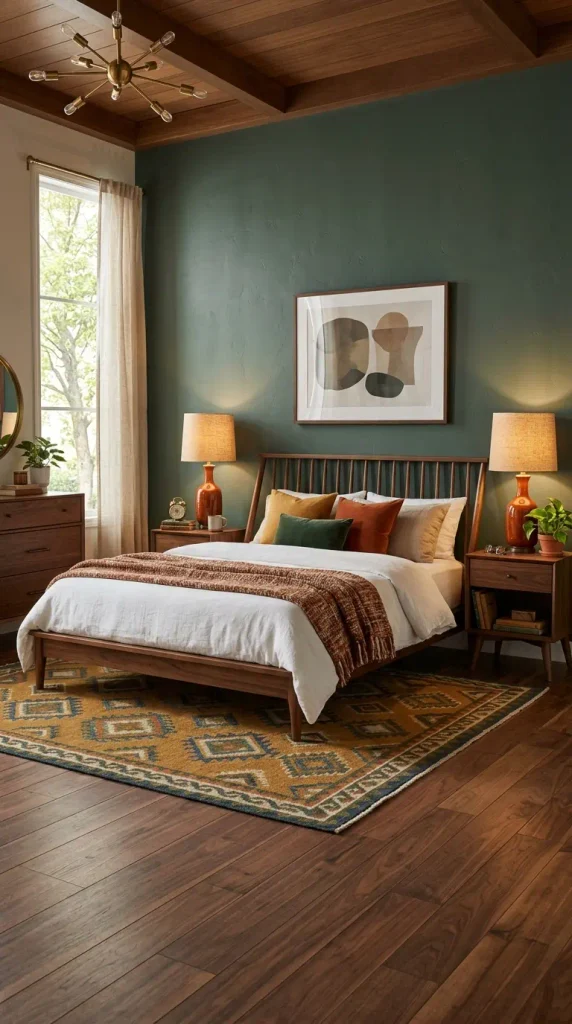
10. Mid-Century Walnut and Warm Ceramic Lighting
Pair rich walnut wood with these two earth tones. Choose a classic spindle-back walnut bed with matching tapered-leg nightstands. Paint the back wall a deeper, moodier shade of juniper sage. Place vintage-style ceramic table lamps with glazed burnt orange bases and warm fabric shades on the side tables.
Mid-century walnut has amber undertones that tie naturally into burnt orange, while dark sage gives the wood grain plenty of contrast to stand out.
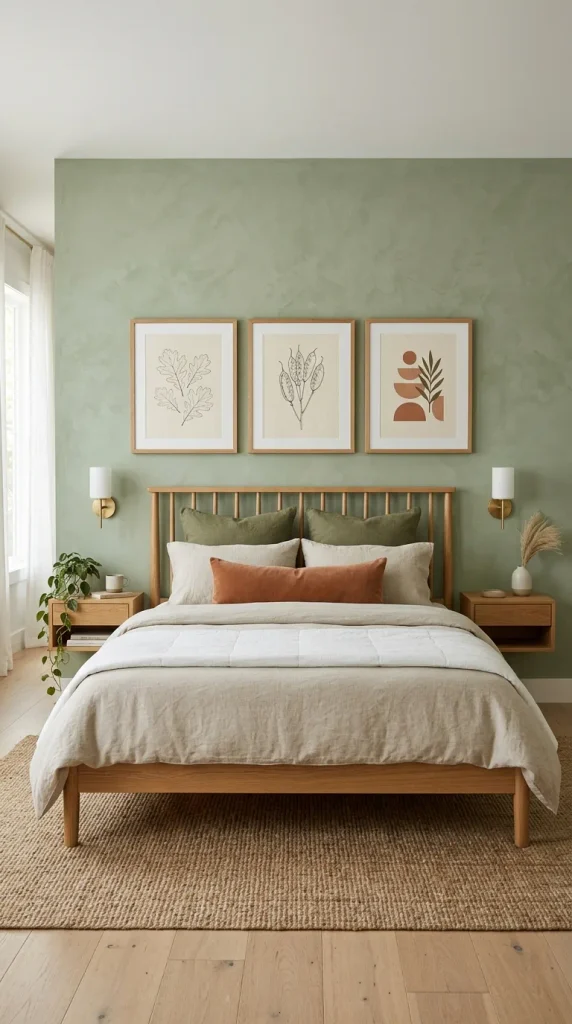
11. Triptych Botanical Line Art
For those who crave neat symmetry, hang three identical oak or black frames in a tight row above the bed. Fill them with minimalist line art: pressed leaves, seed pods, and abstract terracotta shapes printed on textured paper.
A three-piece set pulls the eye outward across the wall, making a narrow room feel wider and keeping your bedroom calm and orderly.
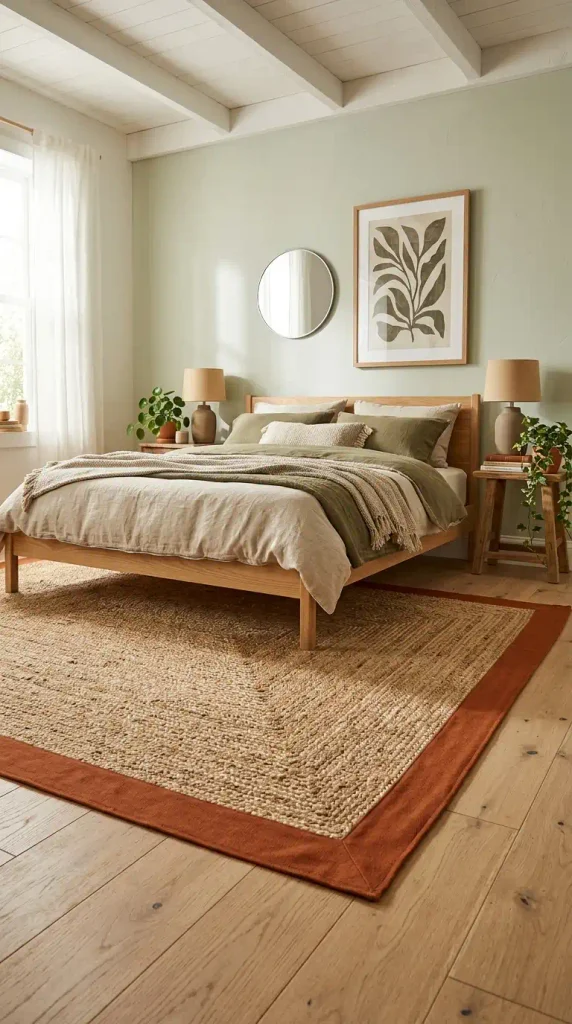
12. Chunky Jute Rug with Rust Border
Don’t overlook the floor when pulling your palette together. Lay down a wide, thick-weave jute or sisal rug edged with a custom burnt orange canvas border. Make sure the rug extends at least two to three feet past the sides and foot of your bed frame, sitting against light floorboards and pale sage walls.
Raw jute adds an earthy, tactile grit that keeps smooth painted walls and soft cotton sheets from feeling too one-dimensional.
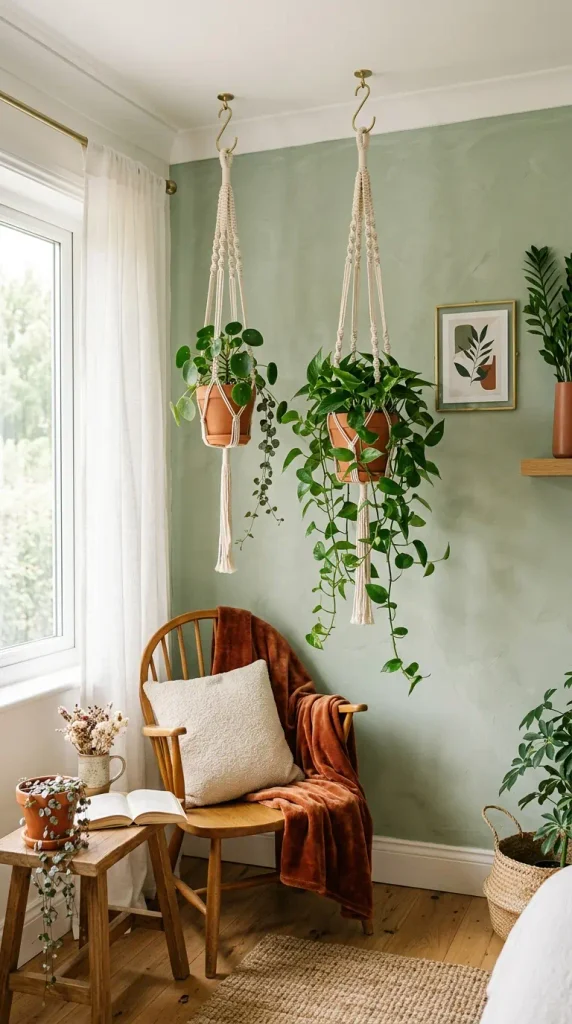
13. Hanging Macramé Terracotta Planters
Bring in vertical interest by hanging cream cotton cord plant holders from brass ceiling hooks in an empty bedroom corner. Pop real terracotta pots inside, planted with trailing varieties like pothos or string-of-hearts, and let them hang against a soft sage accent wall.
Using empty corners for hanging greenery brings real, living textures into the room, naturally connecting the botanical paint to warm clay accents.
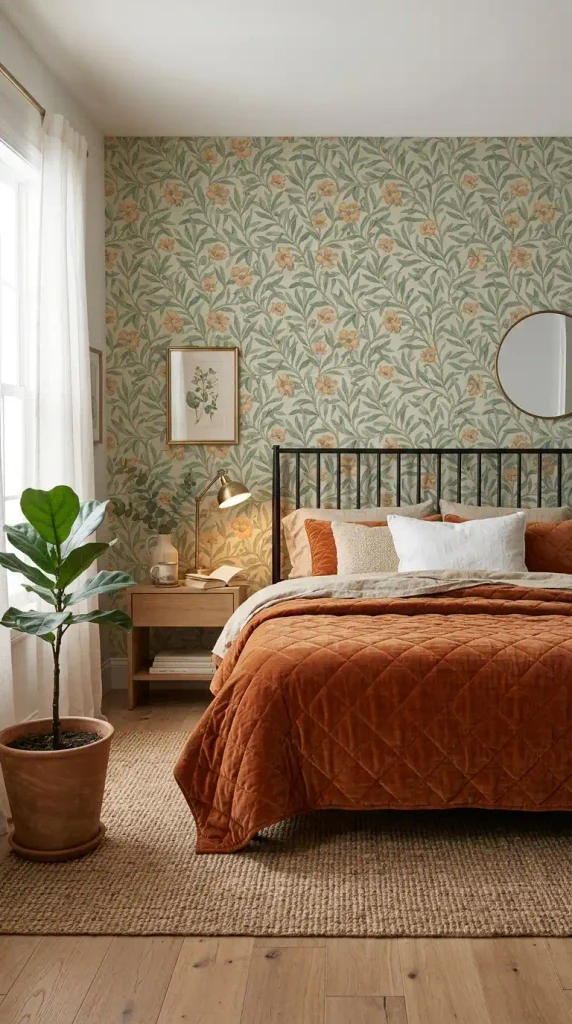
14. Cottage-Style Floral Print with Quilted Bedding
If you prefer a lived-in, traditional feel, look for wallpaper with winding sage stems, wild olive leaves, and muted apricot-orange blossoms. Balance the detailed wall pattern with a simple black iron spindle bed topped with a heavy, diamond-stitched burnt orange quilt.
The solid quilt grounds the busy wallpaper, keeping the bedroom charming without feeling fussy or dated.
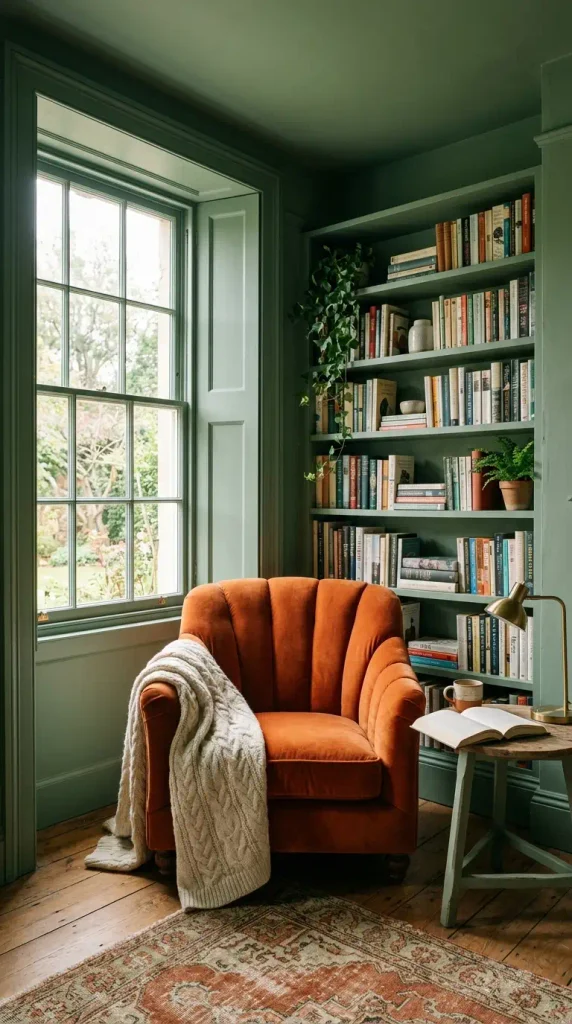
15. Color-Drenched Reading Corner
Pick a quiet corner or window alcove and wrap it entirely in a single shade of mid-tone sage: walls, baseboards, window casings, and shelving. In the center, place an inviting channel-tufted burnt orange armchair with a simple knit blanket draped over the arm.
Painting the trim and walls the exact same color removes harsh visual breaks, making the corner feel deeper while turning the rust chair into the main draw.
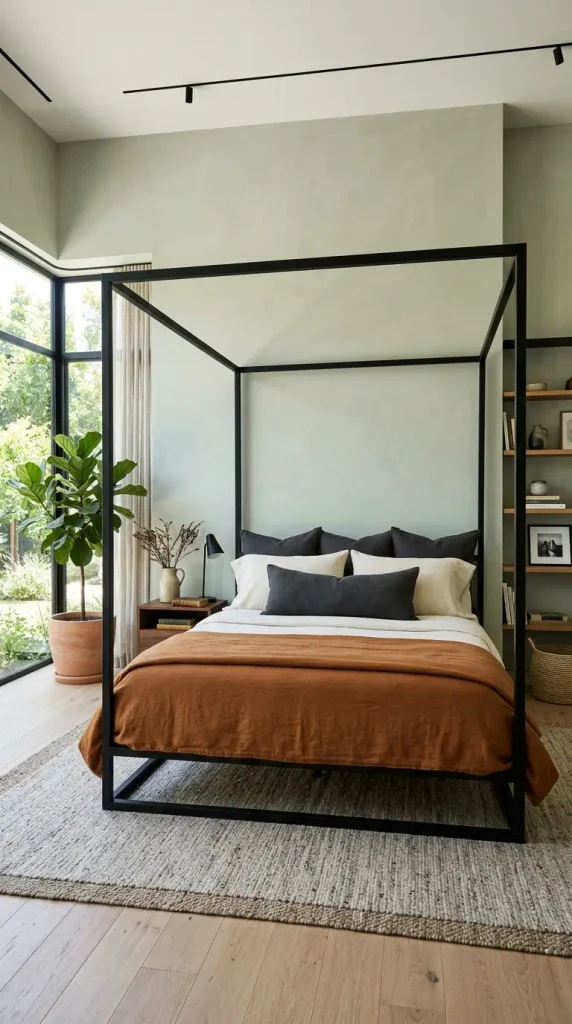
16. Black Steel Frame Bed with Layered Rust Duvet
To give these soft earth tones an urban, modern backbone, use an open black metal canopy or low steel bed frame. Paint the walls an airy, desaturated sage, and layer your mattress with off-white cotton sheets, charcoal accent pillows, and an earthy burnt orange duvet folded across the lower half.
The sharp, matte black framework prevents the palette from leaning too rustic, giving the room a crisp, architectural finish.
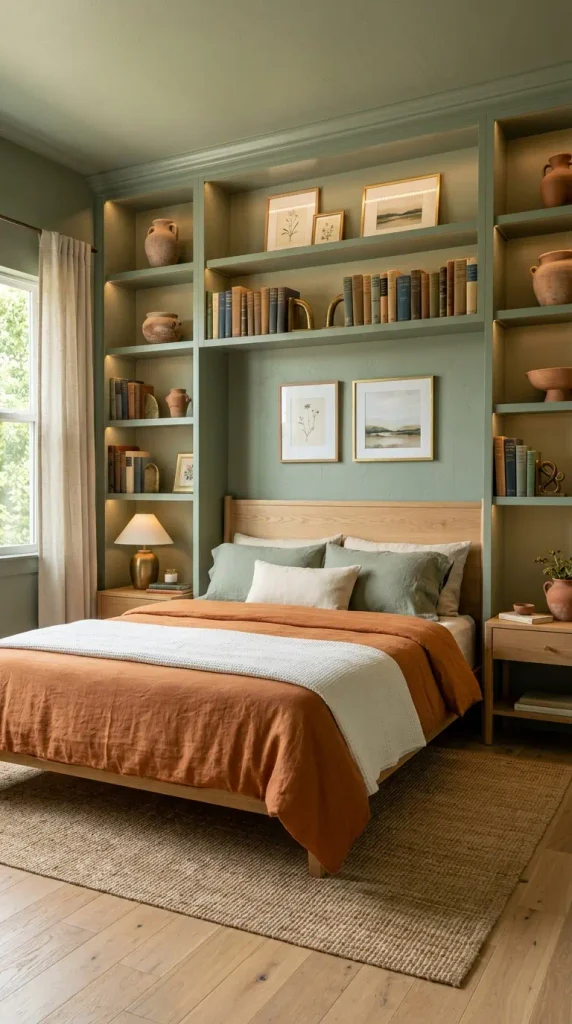
17. Custom Built-In Shelving in Satin Sage
Build shelving around your bed or across an adjoining wall, painted in durable satin sage green. Style the open compartments with old hardcover books, unglazed terracotta pottery, brass bookends, and small framed prints.
Built-ins make the most of every inch of vertical wall space, turning basic bedroom storage into a deliberate feature wall.
18. Collected Gallery Wall with Mixed Wood and Brass
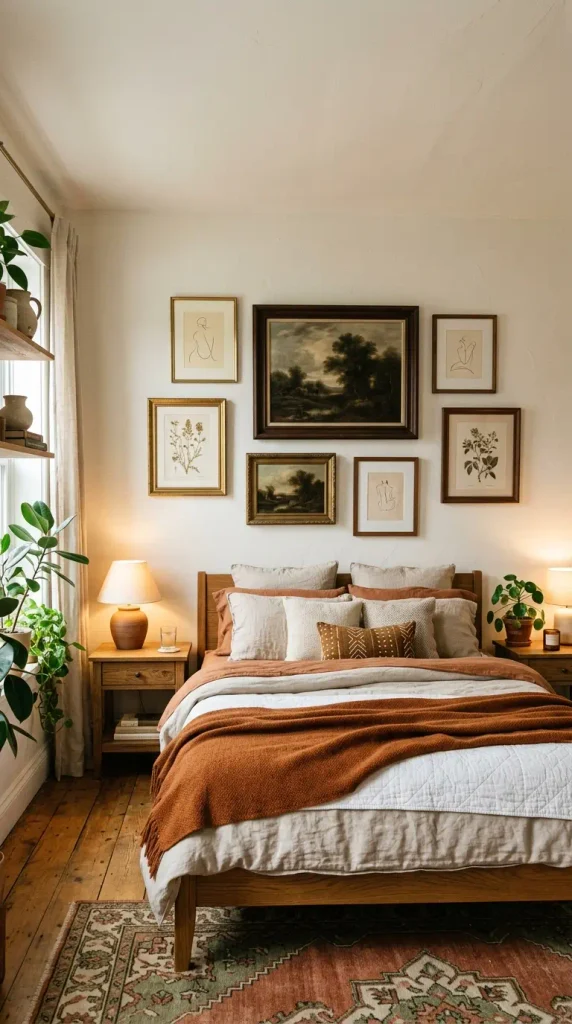
Hang a relaxed, asymmetrical gallery of six to nine varied frames over your bed. Combine vintage oil landscapes, modern line sketches, and botanical prints, framed in a mix of dark walnut and antique brass to tie your walls and accents together.
Mixing frame finishes keeps your wall from looking like a flat, pre-packaged art set, giving the impression of pieces collected thoughtfully over time.
How to Get Your Paint Undertones Right
Working with sage and orange requires a quick check of your lighting and proportions before you buy paint:
Check Your Light: North-facing rooms receive cool, bluish daylight. Choose a sage paint with warm yellow or grey undertones so your walls don’t turn dingy or cold. In bright, south-facing spaces, a cooler, silvery sage will handle intense afternoon sun easily.
Stick to the 60-30-10 Rule: Use sage (or soft neutrals) for about 60% of the room, including main walls. Use warm wood tones, flooring, and secondary linens for 30%. Reserve burnt orange for the remaining 10%—pillows, blankets, ceramics, and artwork.
Mix Up the Textures: When working with colors pulled from nature, flat surfaces can make the room look flat. Blend varied materials: chalky limewash, woven jute, brushed metal, open linen, and soft velvet.
Common Questions
Will sage green and burnt orange make a small bedroom feel smaller?
Not if you keep the proportions right. Use a soft, light-reflecting sage green on the walls to give the room an open, airy backdrop. Then weave burnt orange in through pillows, artwork, or a single throw. You get warmth and depth without crowding the floor plan.
What wood finishes work best with these colors?
Medium-toned natural woods like white oak, walnut, and warm teak blend seamlessly with both sage and burnt orange. Stay away from grey-washed flooring or heavily red cherry stains, which can clash with the undertones in the paint.
What other colors can I bring into this palette?
Warm white, cream, and ivory are your best choices for neutral bases. If you want a small hit of another accent color, muted mustard yellow or a deep, dusty navy will sit comfortably alongside sage and terracotta. For hardware, antique brass and matte black offer clean, simple contrast.
Does this color scheme work year-round?
It does. During spring and summer, emphasize crisp white sheets, light sage walls, and fresh greenery to keep things bright and breezy. Once temperatures drop, layer in heavier burnt orange wool throws, velvet pillows, and warm brass accents to turn your bedroom into a cozy cold-weather retreat.
An empty headboard wall does not have to make your bedroom feel cold or unfinished. Bringing together the quiet calm of sage with the natural warmth of burnt orange creates a balanced space you’ll genuinely look forward to unwinding in every night.
Pick a couple of ideas that match your style, test a few paint swatches in your room’s natural light, and start building your space.