










Introduction: The Unfinished Wall (And Why It Matters More Than You Think)
You’ve bought the right bed frame. The bedding is crisp, the nightstands are solid, the lamps throw a warm, flattering light. Everything should feel done—but something’s off. The wall above your bed is still empty, and that blank space makes even a well-furnished bedroom feel like a hotel room you’re about to check out of.
That empty wall isn’t just a missed opportunity. It’s the visual equivalent of a sentence without a period. It signals “unfinished” to anyone who walks in, and more importantly, it fails to tell your story. For men who care about their space—whether it’s a primary suite, a bachelor pad, or a compact apartment bedroom—that wall is prime real estate for establishing a sleek, masculine aesthetic that feels intentional and lived-in.
This guide exists because decorating as a man doesn’t have to mean defaulting to black leather and a framed sports poster. Modern masculine design has evolved. It’s about moody neutrals and layered textures, statement pieces that anchor a room without shouting, and functional details that make a space work as good as it looks. Across the next ten ideas, you’ll find actionable steps, execution tips, and the reasoning behind why each approach works—so you can stop staring at a blank wall and start building a bedroom that finally feels like yours.
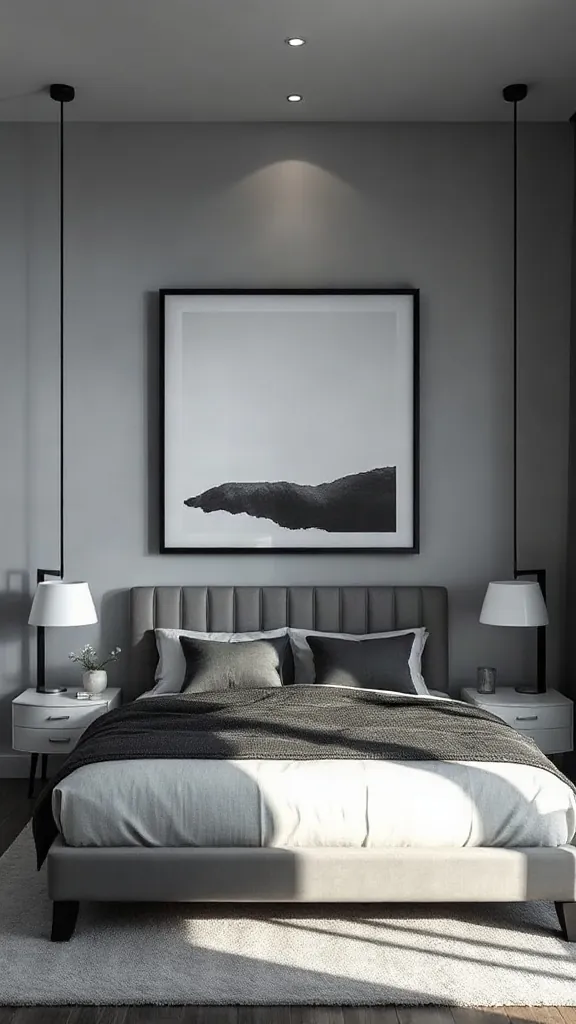
1. Anchor the Room With Oversized Statement Art
Execution
Start by measuring the width of your bed frame. The artwork should span roughly two-thirds to three-quarters of that width—large enough to feel anchored, not so large it dominates. A single piece works better than a cluster for this approach. Choose a black-and-white photograph, an abstract canvas in charcoal and deep blues, or a framed architectural print. Custom framing with a simple black or natural wood profile elevates even an affordable print into something that looks gallery-worthy.
Hang it so the center of the artwork sits roughly 57 to 60 inches from the floor, or about 6 to 10 inches above the top of your headboard. If you’re renting and can’t drill large holes, use museum putty or adhesive strips rated for the weight.
(For exact framing guidelines, refer to Architectural Digest’s tips on standard gallery height)
Why It Works
A single oversized piece does what a gallery wall of small prints cannot: it creates a focal point that immediately reads as intentional. It signals that you made a decision rather than defaulting to whatever was on sale. For men who want a masculine space without clichés, one strong, well-framed piece is the most efficient way to achieve that polished, grown-up look.
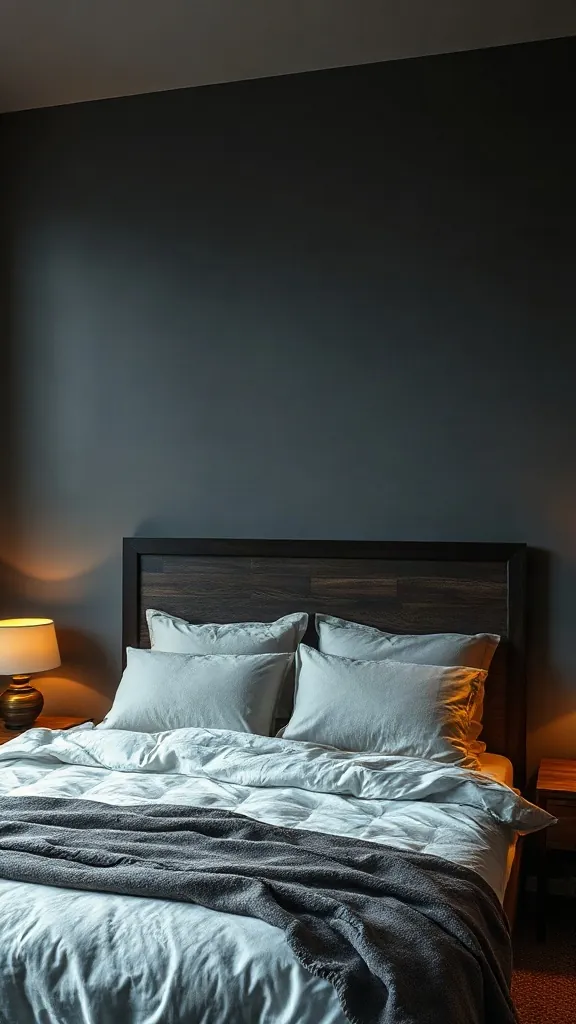
2. Build a Moody Accent Wall in Charcoal or Deep Navy
Execution
Choose the wall behind your bed—the one that already draws the eye. Paint it in a matte charcoal, deep navy, or espresso. Matte finishes absorb light and create depth rather than bouncing it around. Before committing, paint a large swatch on the wall and view it under both morning and evening light. Dark walls can skew muddy under warm, yellow bulbs, so consider switching to 2700K or 3000K bulbs before you paint.
Pair the dark wall with lighter bedding and natural wood nightstands to prevent the space from feeling cave-like (if you want softer inspirations for styling, check out these dreamy bedroom ideas). A wool or linen throw in a complementary tone adds texture without adding visual clutter.
Why It Works
Moody neutrals create visual depth without relying on bold colors or patterns. They feel grounded and confident—qualities that define a modern masculine aesthetic. A dark accent wall also makes the bed feel intentionally placed, as if the room was designed around it rather than assembled piece by piece.
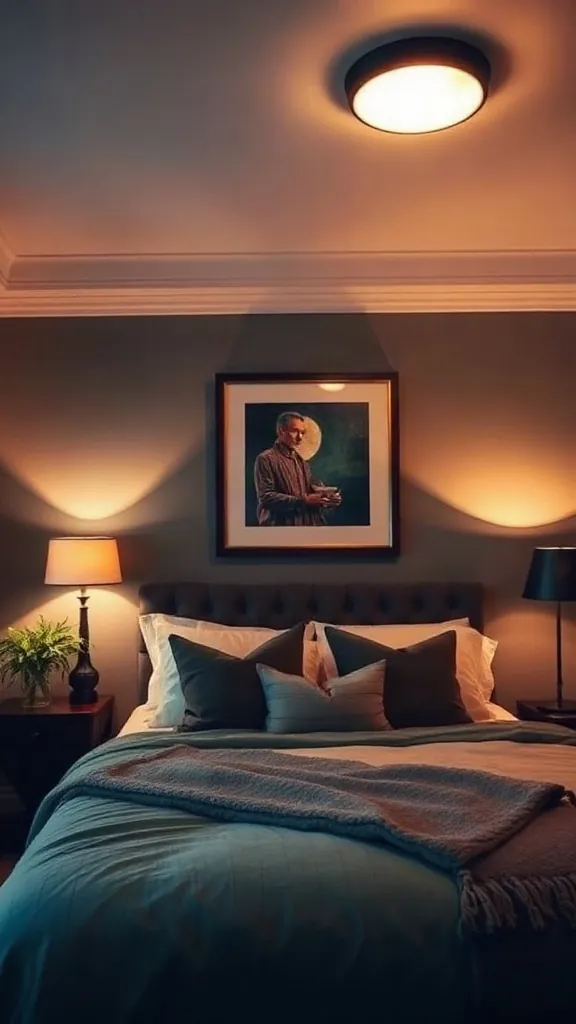
3. Create a Layered Lighting Scheme
Execution
Stop relying on a single overhead fixture. Layer your lighting in three tiers: ambient (ceiling), task (bedside), and accent (picture light or LED strip). For bedside lamps, choose matching fixtures with warm bulbs—2700K to 3000K—and install dimmers if possible. A plug-in picture light above your artwork adds a gallery feel without hardwiring.
Smart bulbs (roughly $12 to $30 each) let you control brightness and color temperature from your phone, so you can shift from “getting ready” bright to “winding down” warm with one tap. (For ideas on how rich leather tones balance modern spaces, check out these 15 lounge ideas with brown leather sofa)
Why It Works
Layered lighting makes a room feel designed rather than simply lit. It creates flexibility for different activities—reading, relaxing, entertaining—and makes textured materials like wood, leather, and stone look richer. A single overhead light flattens everything; layers add dimension and mood.
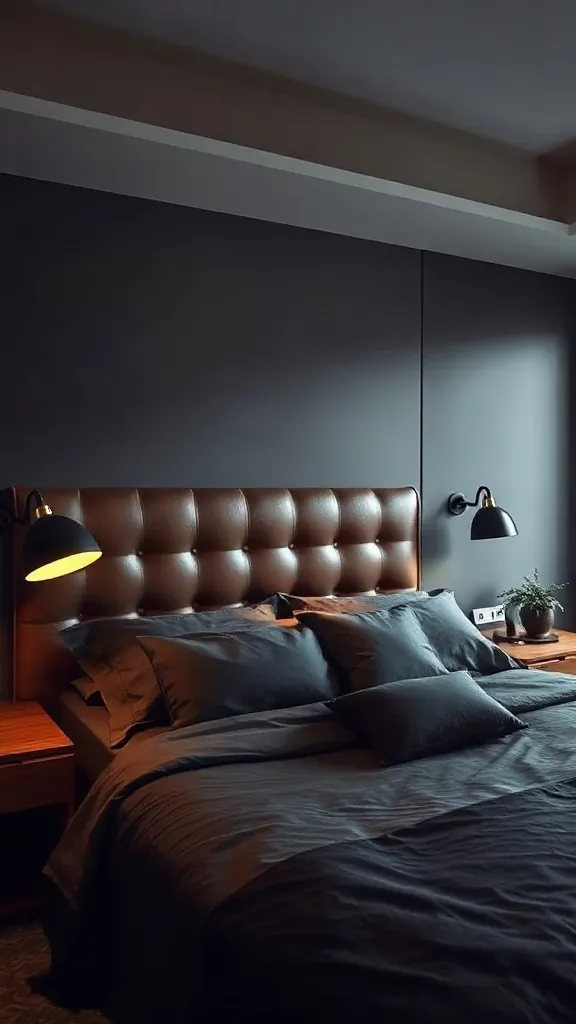
4. Invest in a Leather or Upholstered Headboard
Execution
If your bed frame is basic, the headboard is where you can add substantial visual weight without replacing the entire bed. A faux leather headboard can keep costs under $300 while still feeling luxe. Look for clean lines—channel tufting or a simple rectangular profile—and choose a color that complements your wall: cognac or tan against navy, black or charcoal against lighter walls.
For a more permanent investment, a full leather or performance-fabric upholstered bed frame anchors the room instantly and eliminates the need for a separate headboard decision.
Why It Works
Leather ages well and develops character over time, which aligns with the masculine preference for materials that improve with use rather than degrade. It’s tactile, durable, and immediately elevates the perceived quality of the room. Unlike fabric, it doesn’t collect dust or show stains as readily—practicality that doesn’t compromise on style.
5. Add Symmetry With Matching Nightstands
Execution
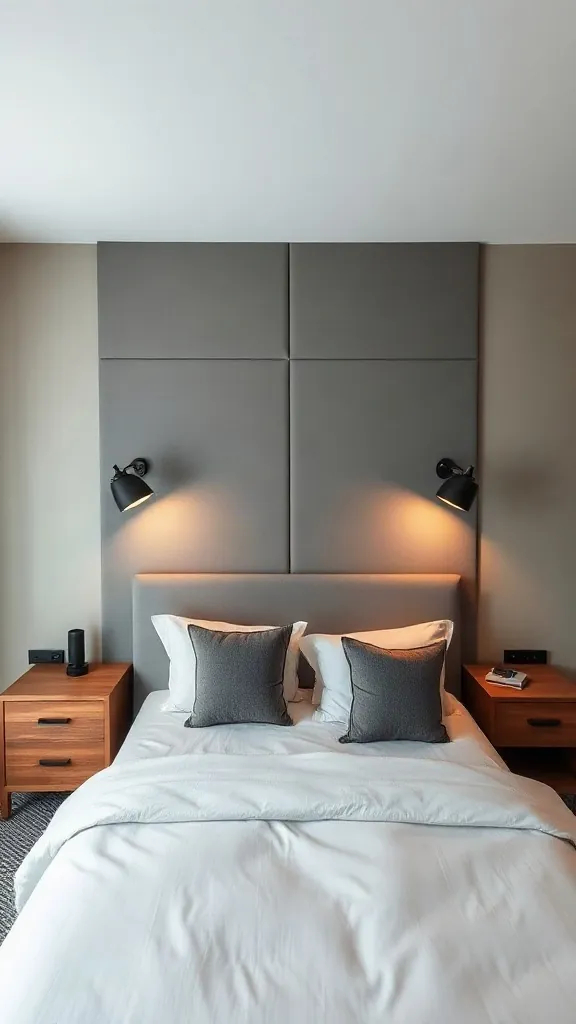
Matching nightstands on either side of the bed create instant visual balance. Look for solid wood pieces with clean lines—walnut, oak, or dark-stained finishes work well. If space is tight, wall-mounted floating nightstands free up floor space and maintain the symmetrical look.
Keep the surfaces uncluttered: a lamp, a small tray for keys and wallet, and perhaps one book. The restraint is part of the aesthetic.
Why It Works
Symmetry signals order and intentionality in modern men’s room decor. It makes a room feel calm and composed rather than chaotic. Matching nightstands also frame the bed more effectively, drawing the eye to the center of the room and reinforcing the bed as the anchor of the space.
6. Conceal Cords and Tech With Purposeful Solutions
Execution
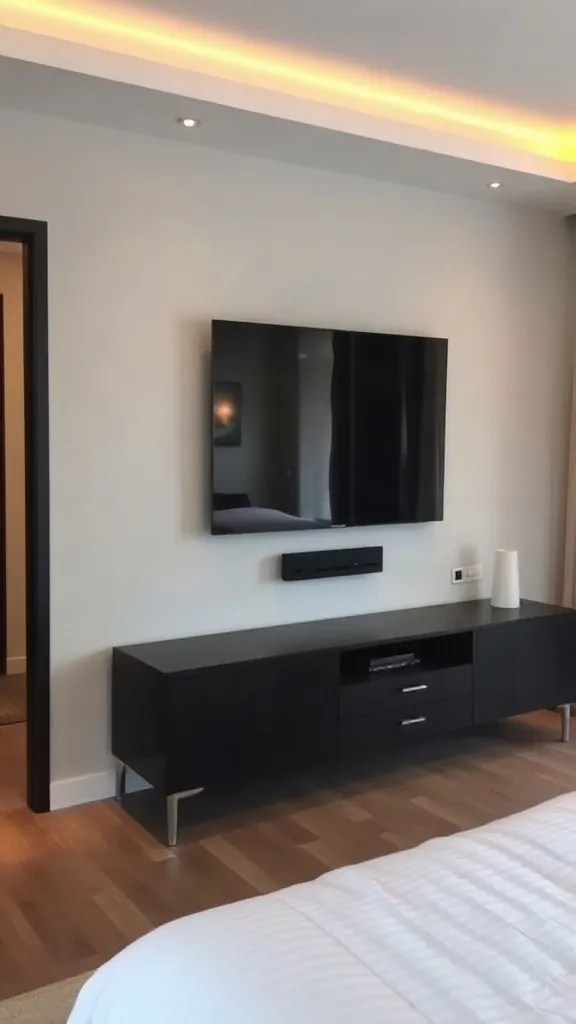
Cable chaos ruins a sleek aesthetic faster than almost anything else. Use under-desk or behind-nightstand cable trays to gather power strips and chargers. For wall-mounted TVs, run cables through the wall if you can, or use a paintable cord cover that matches your wall color. A Samsung “The Frame” TV is a worthwhile investment for bedrooms—it displays art when not in use, disguising the screen entirely.
For charging, wireless charging pads built into nightstands or a sleek charging station on the dresser eliminate the tangle of cords that accumulates on surfaces.(For art-display displays that hide cables, check out the official Samsung The Frame TV)
Why It Works
Clean lines are foundational to modern masculine design. Visible cords and clutter undermine that instantly. Concealing tech doesn’t mean eliminating it—it means integrating it so the room reads as designed rather than assembled from whatever gadgets you own.
7. Layer Textures: Leather, Wool, Linen, and Stone
Execution
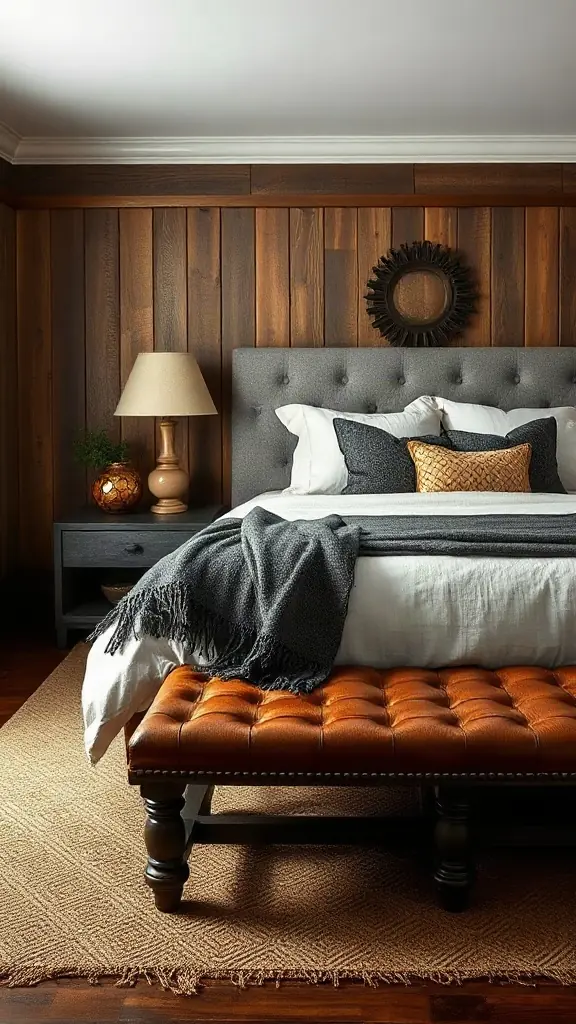
If your color palette is neutral—and it should be for this aesthetic—texture is how you add visual interest. Combine a leather bench or ottoman at the foot of the bed with a chunky wool throw, linen bedding, and a stone or ceramic tray on the nightstand. A high-pile rug under the bed adds softness and absorbs sound.
The key is contrast: smooth against rough, matte against subtle sheen. A leather headboard against a linen duvet. A wool rug on hardwood floors. Each material should feel distinct from the others.
Why It Works
Texture creates depth that color alone cannot achieve, especially in a restrained palette. It also makes a room feel tactile and inviting rather than sterile. A masculine bedroom shouldn’t feel cold—layering textures keeps it grounded and comfortable without becoming soft or fussy.
8. Create a Curated Gallery Wall (With Restraint)
Execution
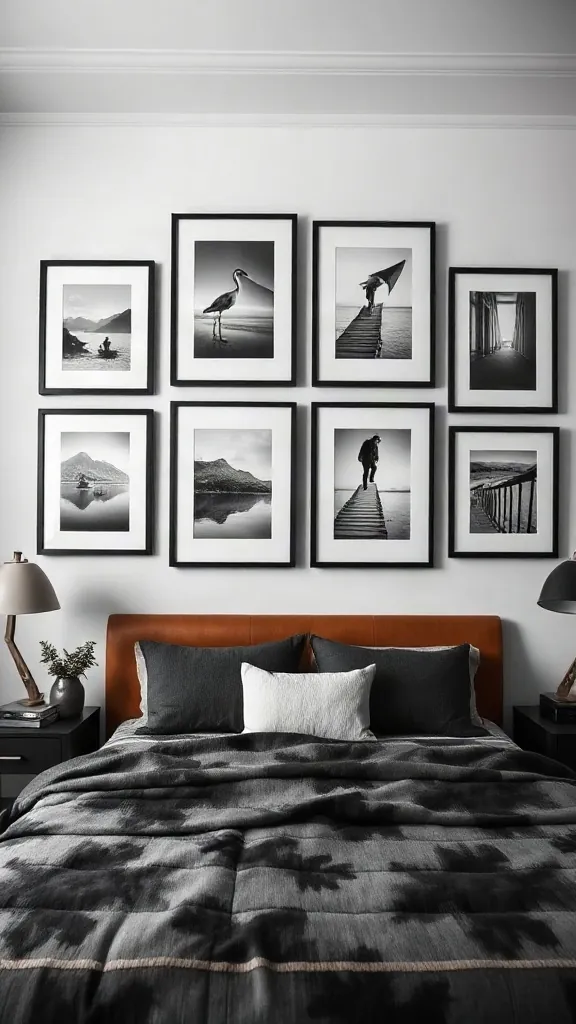
If one piece feels too sparse for your wall, a small gallery wall can work—but discipline is essential. Stick to black or natural wood frames and a cohesive theme: black-and-white photography, architectural prints, or vintage maps. Lay the arrangement on the floor first to determine spacing, then measure and mark the wall before hanging.
Keep the total number of pieces to five or seven at most. Symmetry works better than organic arrangement for this aesthetic. Space pieces 2 to 3 inches apart for a clean, deliberate look.
Why It Works
A well-executed gallery wall adds personality without relying on one large investment piece. It also allows you to incorporate personal interests—travel, music, architecture—in a way that feels curated rather than cluttered. The restraint in framing and arrangement keeps it from drifting into “dorm room” territory.
9. Add a Vintage or Mid-Century Anchor Piece
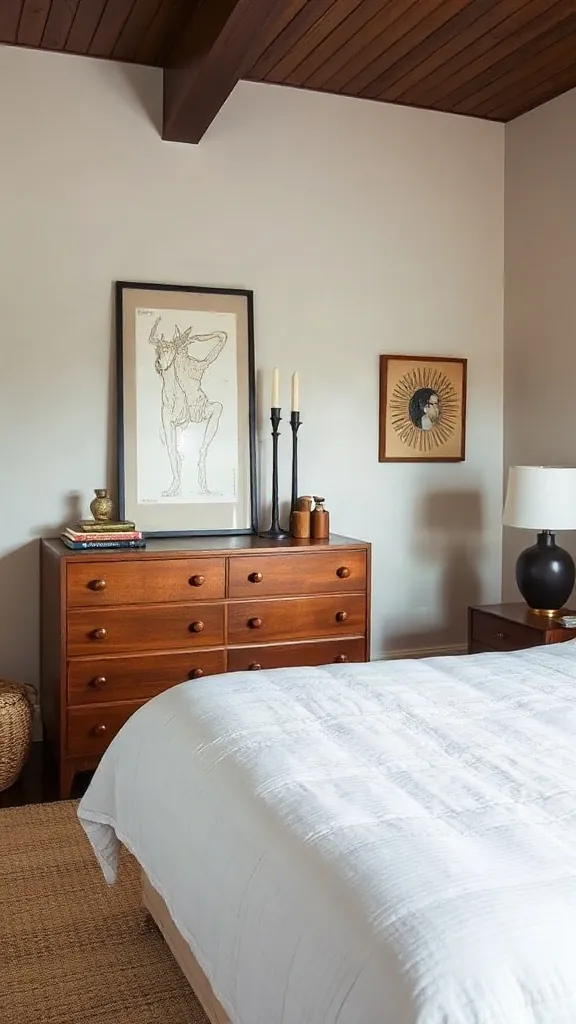
Execution
One vintage piece—a mid-century dresser, a Danish teak media console, or a solid wood chair—adds character that mass-produced furniture cannot replicate. Source from Facebook Marketplace, estate sales, or local antique shops. Look for clean lines and quality wood construction; avoid pieces that require significant restoration unless you enjoy the project.
Style the piece minimally: a tray for everyday items, a single plant, perhaps a framed photo. The vintage anchor does the heavy lifting on its own. (For ideas on how rich leather tones balance modern spaces, check out these 15 lounge ideas with brown leather sofa)
Why It Works
Vintage pieces tell a story and add warmth to a room that can otherwise feel cold and contemporary. They also demonstrate that you’ve invested time in curating your space rather than buying everything from one store in one afternoon. For a masculine aesthetic, mid-century modern is particularly effective—it’s clean-lined and functional without feeling austere.
10. Integrate a Personal Collection (Curated, Not Cluttered)
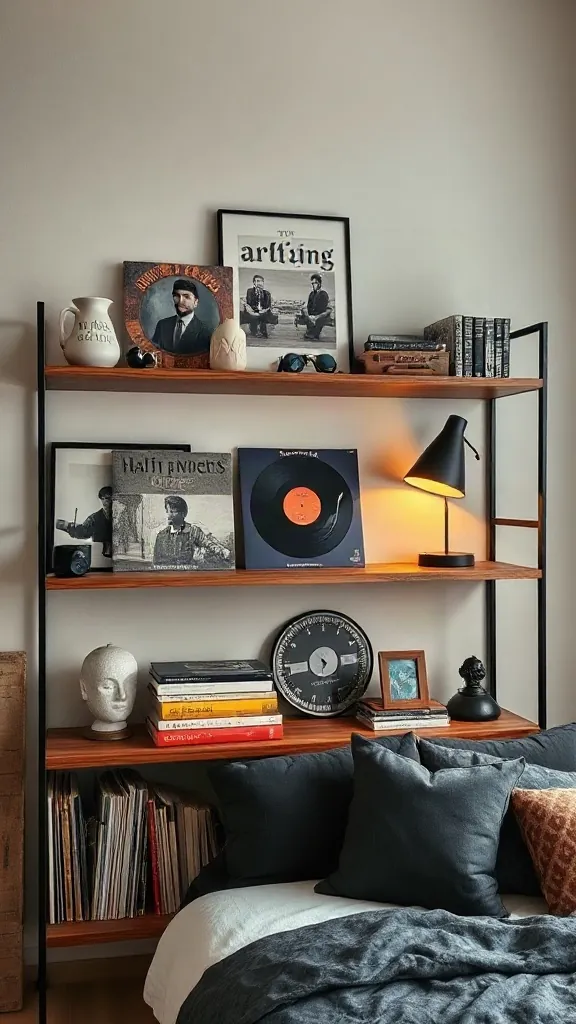
Execution
Whether it’s vinyl records, design books, vintage cameras, or art toys, a personal collection displayed with intention adds depth and signals that the room belongs to a real person. Choose one category—don’t mix everything—and display it on a floating shelf, a media console, or a dedicated cabinet. Edit ruthlessly: the best pieces only.
For vinyl collectors, a mid-century teak cabinet or a modular shelving unit organizes the collection into clean horizontal lines. For books, arrange by color or subject and use bookends that match your material palette.
Why It Works
Curated collections transform hobbies from clutter into deliberate design elements. They make a room feel lived-in and personal without sacrificing the sleek aesthetic. The key is restraint: one collection, well-displayed, reads as sophisticated. Multiple collections scattered everywhere read as mess.
Frequently Asked Questions
What colors work best for a masculine bedroom?
Moody neutrals—charcoal, navy, espresso, deep gray—are foundational for a modern masculine aesthetic. These colors create depth and feel grounded without relying on aggressive “masculine” stereotypes. Natural wood tones (walnut, oak, teak) pair well as accents. Avoid pure black walls unless you have abundant natural light; charcoal or navy achieve the same effect with more flexibility.
How do I make a small bedroom feel masculine and spacious?
Use wall-mounted furniture—floating nightstands, a wall-mounted desk—to free up floor space. Choose a monochrome or limited neutral palette to reduce visual noise. Mirrors can create the illusion of more space. Vertical storage and floating shelves maximize wall space without adding bulk.
Is it okay to have a TV in a masculine bedroom?
Yes, provided it’s integrated thoughtfully. Wall-mount the TV and conceal cables. Consider a “The Frame” style TV that displays art when not in use. Position the TV so it doesn’t block natural light or dominate the room’s primary sightline from the bed.
How can I add personality without making the room feel cluttered?
Choose one collection or theme and display it with restraint. One well-curated shelf or gallery wall adds personal character without visual noise. Edit regularly—if you haven’t looked at something in six months, consider storing or removing it. Quality over quantity applies to display items as much as furniture.
What’s the single most impactful change I can make?
Anchor the wall above your bed with a single oversized piece of art or a moody accent wall. This one change defines the room’s focal point and instantly makes the space feel intentional rather than unfinished. Everything else can follow over time.
Can I achieve a masculine aesthetic on a budget?
Absolutely. Thrift stores and Facebook Marketplace are excellent sources for vintage furniture. Painting an existing piece in matte black or dark charcoal transforms it. Upgrading lighting—warm bulbs, dimmers, a plug-in picture light—is inexpensive and high-impact. The aesthetic comes from intentional choices, not expensive ones.
Conclusion: Finalizing Your Men’s Room Decor
The space above your bed isn’t just empty wall—it’s the first thing you see when you walk in and the last thing you see before you sleep. Leaving it blank is leaving an opportunity on the table. The ten ideas above are not prescriptive formulas; they’re starting points. Pick one, execute it well, and see how the room shifts. Then layer in another.
Sleek, masculine design doesn’t require a massive budget or a professional designer. It requires decisions—intentional, confident choices about what belongs in your space and what doesn’t. Start with the wall. Anchor it. Build outward from there. The room you want is one deliberate step away.